
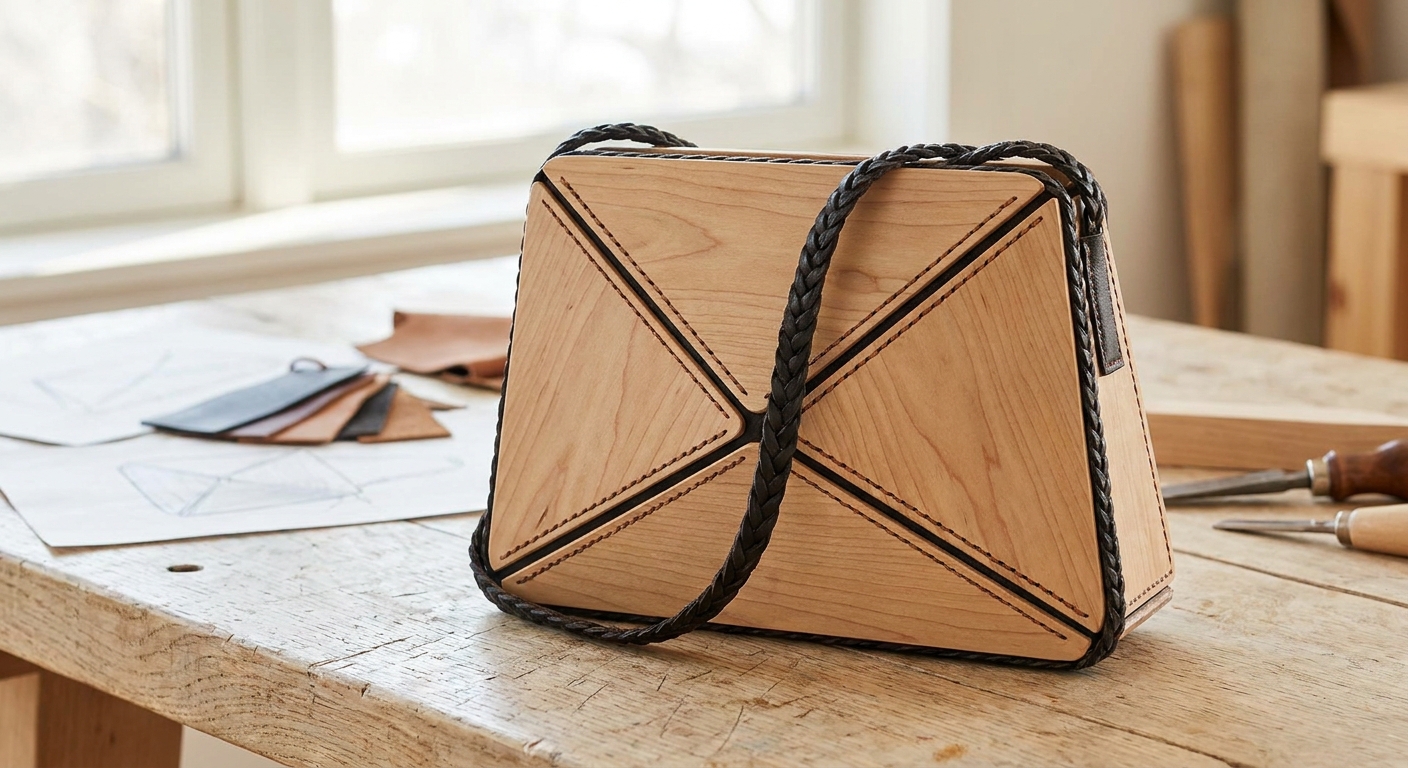
The TriArc: A Geometric Wooden Handbag Redefining Contemporary Luxury
In the ever-evolving landscape of high fashion, where trends emerge and fade with seasonal whims, there exist rare objects that transcend the ephemeral. These are not mere accessories; they are statements, wearable sculptures born from the confluence of art, architecture, and uncompromising craftsmanship. They speak a language of form, texture, and intention. It is within this elevated echelon of design that we find the TriArc, a revolutionary geometric wooden handbag that challenges conventions and redefines the very essence of a luxury carryall. For the discerning individual who seeks more than just a brand name—who craves bold structure, clean lines, and the tangible touch of an artisan’s hand—the TriArc is not just a choice, but an affirmation of a sophisticated design philosophy.
This is a handbag conceived for the contemporary connoisseur. Its identity is forged not in fleeting fads, but in the timeless principles of geometry and the honest beauty of natural materials. The TriArc’s crisp, architectural body, crafted from impossibly light and flexible wooden panels, stands as a tribute to modernism. This stark, structural elegance is softened and secured by a masterful web of interlaced leather strapwork, each junction punctuated by precise, meticulous hand-stitching. To carry the TriArc is to carry a piece of functional art, a conversation starter that signals an appreciation for the avant-garde and a deep respect for artisanal heritage. In this comprehensive exploration, we will deconstruct the TriArc, from its conceptual foundations to the intricate details of its creation, revealing why this exceptional geometric wooden handbag is the definitive accessory for the modern tastemaker.
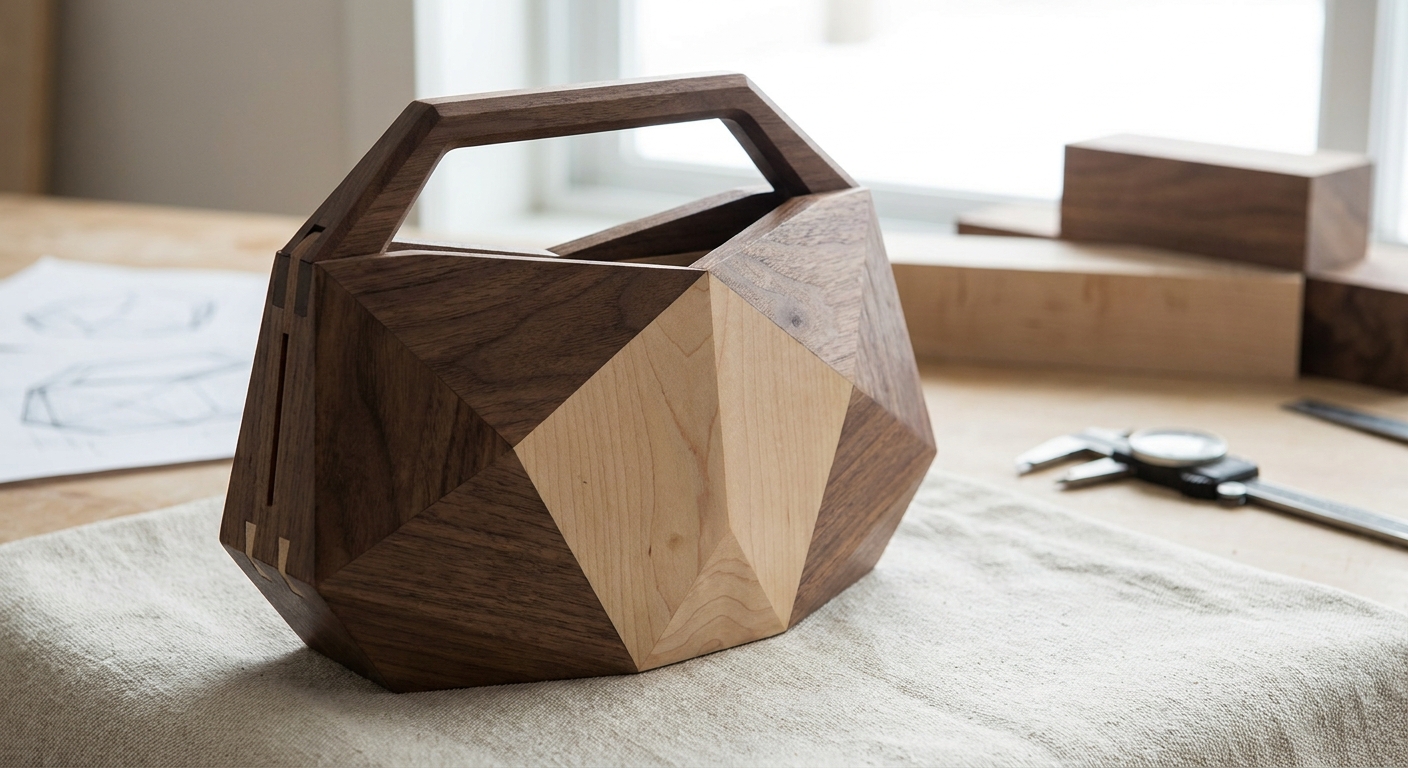
The Philosophy of Form: Deconstructing the Geometric Handbag
To truly appreciate the TriArc, one must first understand the powerful legacy of the shapes that define it. Geometry is the silent language of the universe, a set of principles that governs everything from the spiral of a galaxy to the structure of a crystal. In the hands of a designer, it becomes a tool for creating order, harmony, and profound visual impact. The TriArc is a direct descendant of a rich history of design movements that placed geometry at their very core.
A Legacy of Geometry in Design History
The early 20th century was a crucible of artistic revolution, where creators sought to break from the ornate traditions of the past and forge a new visual vocabulary for the modern world. Movements like the German Bauhaus school championed the idea that form must follow function, stripping objects down to their essential geometric components. They celebrated the purity of the circle, the square, and the triangle, believing these fundamental shapes held a universal, rational beauty. We see echoes of this philosophy in the TriArc’s unwavering commitment to clean lines and an uncluttered silhouette. There are no superfluous embellishments, no decorative frills; every line, every angle serves a purpose, contributing to the bag’s overall structural and aesthetic integrity.
Simultaneously, movements like Cubism in painting and De Stijl in architecture were deconstructing reality into geometric planes, exploring objects from multiple viewpoints at once. This fragmentation and reassembly of form challenged perception and created a dynamic new energy. The TriArc, with its distinct panels and intersecting lines, captures this same dynamic spirit. It is not a static object; as it moves with the wearer, light and shadow play across its faceted surfaces, creating a constantly shifting visual experience. It is a piece that invites inspection, rewarding the observer with new details and perspectives upon every glance. This rich heritage informs the very soul of the TriArc, elevating it from a simple handbag to a piece of design history in its own right.
More Than an Accessory: The Handbag as Architectural Statement
In a market saturated with soft, amorphous totes and slouchy hobos, a structured handbag makes an immediate and powerful statement. The TriArc takes this concept to its zenith, functioning as a piece of “wearable architecture.” Its design language is one of precision, intention, and permanence, mirroring the principles that guide the creation of a great building. The crisp, defined edges of the wooden body create a sense of stability and strength, while the interlaced leather acts as both a supportive framework and a decorative facade.
Think of the great modernist architects like Mies van der Rohe or Le Corbusier, who used exposed steel frames and glass walls to reveal the inner workings of their structures. The TriArc employs a similar honesty in its design. The construction is not hidden; it is celebrated. The visible hand-stitching, the way the leather weaves through the wood, the precise joinery of the panels—all are integral parts of the bag’s aesthetic. This transparency of craft is a hallmark of high design and a key differentiator in the luxury space. A geometric wooden handbag like the TriArc is an intentional choice. It communicates a personality that is organized, confident, and appreciative of structure, both in their accessories and in their life. It is a piece that doesn’t just hold your belongings; it holds its own space, a miniature, portable monument to contemporary design.
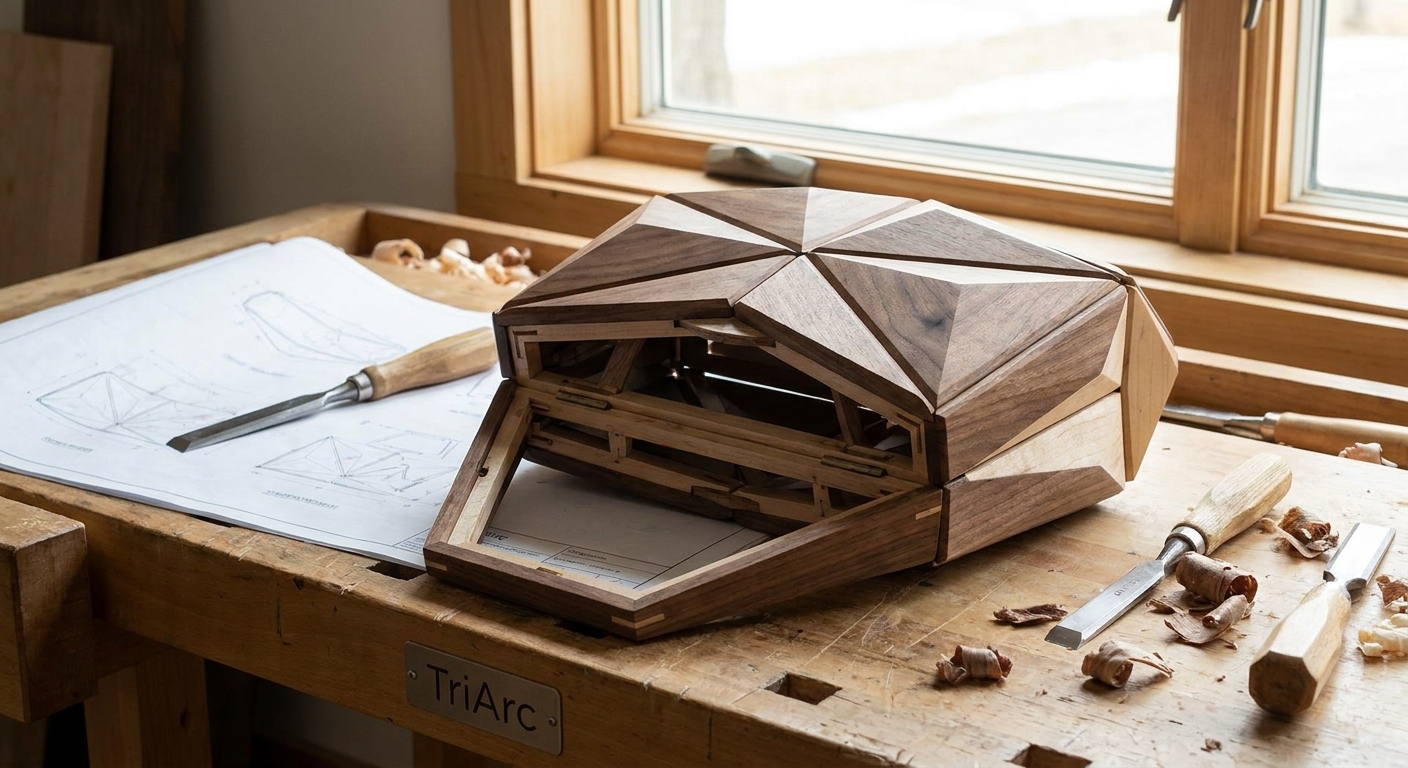
The Art of Construction: An Inside Look at the TriArc’s Creation
A design as ambitious as the TriArc is only as successful as its execution. The journey from a conceptual sketch to a finished, tangible object is one of intense skill, material innovation, and countless hours of dedicated craftsmanship. The creation of this unique geometric wooden handbag is a symphony of disparate elements—the warmth of wood, the strength of leather, the precision of a needle and thread—all brought together in perfect harmony by the hands of master artisans. Let us pull back the curtain and explore the meticulous processes that give the TriArc its soul.
The Soul of the Bag: Selecting and Preparing the Perfect Wood
The story of the TriArc begins in a forest. The choice of wood is the foundational decision upon which the entire character of the bag is built. Not just any timber will suffice. The material must possess a rare trinity of qualities: exceptional lightness, inherent flexibility, and a captivating grain. For the TriArc, artisans often turn to premium Italian Walnut or specially cultivated Poplar. Walnut is prized for its deep, rich coloration and complex, swirling grain, ensuring that each bag has a unique visual fingerprint. Poplar, on the other hand, is renowned for its remarkable lightness and pale, creamy hue, which provides a stunning, minimalist canvas for the design.
The wood is sourced from sustainably managed forests, a crucial aspect of the bag’s identity that aligns with the values of the modern luxury consumer. Once selected, the raw lumber undergoes a rigorous preparation process. It is carefully kiln-dried to achieve the perfect moisture content, a critical step that prevents future warping or cracking. Then, the artisans meticulously inspect each plank, reading the grain to decide how to best cut the panels to maximize their aesthetic beauty and structural integrity. The surface is then sanded through multiple, progressively finer grits until it feels as smooth and warm as polished stone. Finally, a proprietary blend of natural oils and waxes is applied by hand. This finish doesn’t just protect the wood from the elements; it penetrates deep into the fibers, enriching the color and giving the surface a soft, lustrous sheen that begs to be touched.
Engineering Elegance: The Magic of Flexible Wooden Panels
Herein lies the central innovation of the TriArc: the transformation of a famously rigid material into a series of light, flexible panels that form the bag’s body. This is where traditional woodworking meets cutting-edge technology. The secret lies in a technique known as “kerf bending.” Using high-precision laser cutters, the artisans etch a specific, repeating pattern of cuts and grooves onto the back of each thin wooden panel. These cuts, or kerfs, are incredibly fine and precisely spaced, removing just enough material to allow the wood to flex and curve along a predetermined axis without splintering or breaking.
This process is an art form in itself. The depth, width, and pattern of the kerfs must be calculated with microscopic accuracy, tailored to the specific species and grain of the wood being used. Too shallow, and the wood remains rigid; too deep, and its structural integrity is compromised. The result of this engineered elegance is a material that retains the visual beauty and soul of natural wood but behaves with the pliability of a much softer material. It is this breakthrough that allows the TriArc to have a crisp, architectural silhouette while still offering a degree of give and adaptability, conforming subtly to the wearer’s body and movement. It is a testament to how innovation can unlock new possibilities in even the most ancient of materials.
The Leather Labyrinth: Interlaced Strapwork as Functional Art
If the wooden panels are the TriArc’s skeleton, the interlaced leather is its sinew and skin. It is the element that binds the structure together, provides its strength, and introduces a crucial element of textural and visual contrast. The leather chosen is of the highest caliber—typically full-grain, vegetable-tanned leather sourced from esteemed Italian tanneries. Vegetable tanning is a centuries-old, environmentally conscious process that uses natural tannins from tree bark and plants. It produces a leather that is firm, durable, and develops a beautiful, rich patina over time, meaning the bag will only become more beautiful with age and use.
The long, continuous straps are cut from the hide with extreme precision. The artisan then begins the intricate process of weaving and interlacing these straps through and around the wooden panels. This is not merely a decorative application; it is a feat of structural engineering. The tension of the leather is what holds the entire bag together, creating a strong yet flexible framework. The pattern of the weave is carefully designed to distribute stress evenly, ensuring the bag can be carried with confidence. This marriage of wood and leather is a dialogue between hard and soft, rigid and pliable, cool and warm. The deep, earthy scent of the leather combines with the subtle, clean aroma of the wood, creating a multi-sensory experience that underscores the bag’s organic origins and artisanal quality.
The Signature of the Artisan: Precision Hand-Stitching
The final, defining detail of the TriArc is the hand-stitching. In an age of mass production and automated assembly, the decision to stitch by hand is a deliberate and powerful statement. It is a commitment to a level of quality, durability, and beauty that no machine can replicate. The artisans use the traditional saddle stitch, a time-honored technique favored by master leatherworkers and equestrian craftsmen for centuries. This method uses a single, long piece of waxed linen thread and two needles, passing the thread through the same hole from opposite sides to create a locking stitch.
The result is a seam that is not only aesthetically pleasing in its regularity and texture but also exponentially stronger than a machine-sewn lockstitch. If one stitch in a machine-sewn seam breaks, the entire seam can unravel; if a saddle stitch is ever severed, the remaining stitches will hold firm. This unwavering commitment to durability ensures that the TriArc is not a disposable fashion item, but a true heirloom piece built to last for generations. Each stitch is a mark of human touch, a testament to the hours of focused concentration and skill invested in every single bag. It is the quiet, confident signature of the artisan, a final seal of quality on this exceptional geometric wooden handbag.
The TriArc Experience: A Symphony of Senses and Function
Owning a TriArc handbag is an experience that extends far beyond its striking visual appeal. It is an engagement with an object of considered design, where every detail has been calibrated to delight the senses and serve a practical purpose. It is a piece that feels as good as it looks and functions with an intelligence that belies its artistic form. From the moment you pick it up, the TriArc begins to tell its story not just to the eyes, but to the hands and the rhythm of your daily life.
A Study in Tactility: The Feel of Wood and Leather
In our digitally-saturated world, the experience of authentic, natural texture is a luxury in itself. The TriArc is a masterclass in tactility. Your fingertips will instinctively want to trace the smooth, undulating grain of the polished wooden panels, warmed slightly by the ambient temperature. There is a satisfying solidity to the wood, a connection to the natural world that is both grounding and invigorating. This cool, sleek surface is perfectly contrasted by the supple, yielding texture of the full-grain leather. You can feel the subtle grain of the hide, the product of a natural life, and the firm, waxy finish of the hand-stitching under your thumb. Even the hardware provides a distinct sensory input—the cool, reassuring weight of the custom-milled clasp, the satisfyingly crisp ‘click’ as it secures. To carry the TriArc is to be in constant, pleasant contact with a beautifully crafted object, a small but significant source of daily delight.
Surprisingly Practical: Functionality Within the Form
A common misconception about a statement piece, particularly a geometric wooden handbag, is that it must sacrifice practicality for the sake of its design. The TriArc elegantly refutes this notion. The first surprise is its weight. Thanks to the selection of lightweight woods like Poplar and the engineered thinness of the panels, the bag is remarkably light and comfortable to carry, even for extended periods. The geometric shape, while visually bold, has been carefully considered for utility. The structured body ensures the bag stands on its own, making it easy to access its contents without it collapsing. It also protects its contents—a tablet, a notebook, or a pair of sunglasses are far safer inside its semi-rigid frame than in a soft, unstructured bag.
Inside, the thoughtful design continues. The interior is typically lined with a soft, durable material like suede or high-grade canvas, protecting your belongings from scratches. Strategically placed slip pockets and a zippered compartment provide organization for smaller essentials like keys, a phone, and lipstick, preventing them from getting lost in the main compartment. The capacity is deceptive; the structured volume can comfortably accommodate daily necessities without appearing bulky. The TriArc proves that high design and everyday usability are not mutually exclusive concepts; rather, in the hands of a master designer, they are one and the same.
Styling the Statement Piece: From Boardroom to Gallery Opening
The TriArc is a chameleon of style, possessing a rare ability to elevate any ensemble. Its strength lies in its bold, clean structure, which acts as a powerful anchor point for a wide range of looks. This is not a bag that simply complements an outfit; it completes it, and often, defines it. The key to unlocking its versatility is understanding how to balance its strong personality.
- For the Office: Paired with a sharply tailored pantsuit or a minimalist sheath dress, the TriArc communicates confidence and a sophisticated eye for design. Its structured form mirrors the professionalism of a traditional briefcase but with infinitely more style. Choose a TriArc in a classic dark Walnut to project an aura of authority and impeccable taste.
- For a Casual Weekend: Elevate a simple outfit of high-waisted denim and a crisp white shirt or a cashmere sweater. The TriArc instantly transforms this classic combination from simple to chic, adding a point of architectural interest and artisanal luxury.
- For an Evening Out: For a gallery opening, a cocktail party, or a fine dining experience, the TriArc is the ultimate conversation starter. Wear it with a monochromatic silk jumpsuit or a sculptural cocktail dress. It serves the role of both a clutch and a piece of jewelry, its unique form a testament to your personal style.
The beauty of a piece like this is its inherent adaptability. For more in-depth ideas on integrating this unique accessory into your wardrobe, explore our complete guide on Styling Luxury Wooden Handbags, which offers a wealth of inspiration for taking your look from day to night with seamless elegance.
The Intersection of Sustainability and Luxury
In the 21st century, the definition of luxury has evolved. It is no longer solely about price tags or brand logos; it is increasingly about consciousness, ethics, and longevity. The modern luxury consumer seeks products that are not only beautiful and well-made but also created with respect for the planet and its people. The TriArc handbag stands firmly at this intersection, embodying a philosophy where sustainable practices and artisanal craftsmanship are the ultimate luxuries.
Conscious Craftsmanship: The Choice of Materials
The very foundation of the TriArc—natural wood—positions it as a more sustainable choice compared to the plethora of synthetic, petroleum-based materials common in the fashion industry. The wood is sourced from forests that are responsibly managed and certified by organizations like the Forest Stewardship Council (FSC), ensuring that the timber is harvested in a way that protects biodiversity and maintains ecological balance. This is a stark contrast to the environmental toll of “vegan leathers” (often just plastic) and other synthetic textiles. As noted by many experts in publications like Forbes’ coverage of sustainability, true environmental consciousness in fashion often means returning to natural, renewable, and biodegradable materials.
Furthermore, the choice of vegetable-tanned leather is another pillar of the TriArc’s sustainable ethos. Unlike chrome tanning, the most common method used in fast fashion, which uses heavy metals and produces toxic wastewater, vegetable tanning is an organic process that has been practiced for millennia. It is a slower, more deliberate method, but the result is a product that is not only safer for the environment and the artisans but also superior in quality and longevity. A geometric wooden handbag like the TriArc is an investment in a piece that is designed to last a lifetime, not just a season—the ultimate antidote to the throwaway culture of fast fashion.
The Value of Artisanal Production
The TriArc is a powerful rebuke to the faceless, automated production lines that dominate the modern world. Every single bag is the result of a collaboration between a designer’s vision and an artisan’s skilled hands. This “slow fashion” approach carries immense value that goes beyond the physical object itself. It supports the preservation of traditional skills like saddle stitching and fine woodworking, crafts that have been passed down through generations and are at risk of being lost. By choosing an artisan-made product, the consumer becomes a patron of these arts, helping to ensure their survival.
This mode of production also fosters a more human connection to the objects we own. Knowing that a specific person, with their unique skill and dedication, spent hours meticulously crafting your handbag imbues it with a story and a soul that a mass-produced item can never possess. It is a celebration of human potential and creativity. This commitment to craftsmanship ensures a superior level of quality control and attention to detail, resulting in a product that is not just beautiful but built with integrity from the inside out. In a world of fleeting digital interactions, the tangible, enduring quality of an artisan-made object offers a profound sense of permanence and value.
The TriArc in the Pantheon of Iconic Handbags
Certain handbags achieve a status that transcends their function. They become cultural touchstones, signifiers of an era, and coveted icons of design. While many of these bags rely on logo recognition or celebrity endorsement, a select few earn their place through the sheer force of their innovative design. The TriArc, with its audacious use of materials and its uncompromising geometric form, is poised to join this elite group as a modern classic in the making.
A Modern Classic for the Discerning Collector
What makes a handbag iconic? It is a unique and instantly recognizable silhouette, an innovative use of materials, and a design philosophy that captures a particular moment in time while also feeling timeless. The TriArc possesses all these qualities. Its triangular profile and wood-and-leather construction are unlike anything else on the market, making it immediately identifiable. Its design speaks directly to our contemporary appreciation for minimalism, architectural forms, and authentic craftsmanship, much like how iconic pieces in The Museum of Modern Art’s collection capture the spirit of their own eras.
For the discerning collector, the TriArc represents an opportunity to invest in a piece of future history. It is a bag for those who lead, not follow; for those who appreciate the intellectual rigor behind a design as much as its aesthetic appeal. Unlike bags that are produced in the millions, the artisanal nature of the TriArc’s production means it will always be a relatively rare item. This inherent scarcity, combined with its groundbreaking design and heirloom-quality construction, gives it all the hallmarks of a future collector’s piece—an item that will be as sought-after and relevant in decades to come as it is today.
Who is the TriArc Woman?
The TriArc is not for everyone, and that is its greatest strength. It is designed for a specific kind of individual—one who is confident, intellectually curious, and moves through the world with intention. She is an architect who appreciates the bag’s structural integrity, an art gallery director who sees its sculptural quality, a tech entrepreneur who values its innovative design, or a writer who is drawn to its unique story.
She rejects the mundane and actively seeks out objects that reflect her own curated, considered lifestyle. Her style is not dictated by magazines, but is an authentic expression of her personality. She understands that true luxury is not about overt branding, but about quiet quality, impeccable craftsmanship, and a design that sparks conversation and inspires admiration. She knows how to style a statement piece because her entire life is a statement of her own making. The TriArc is more than just her handbag; it is a reflection of her worldview—structured, beautiful, and unapologetically bold.
Conclusion: The Enduring Allure of the Geometric Wooden Handbag
In the final analysis, the TriArc handbag is far more than the sum of its exquisite parts. It is a bold manifesto for a new era of luxury—one that prioritizes intelligent design, authentic craftsmanship, and sustainable principles. It stands as a powerful testament to the idea that a handbag can be both a highly functional object and a profound work of art. The masterful fusion of light, flexible wooden panels with supple, interlaced leather creates a visual and tactile experience that is entirely unique in the world of accessories.
From its conceptual roots in the great geometric design movements of the 20th century to the meticulous, human touch of its hand-stitched details, the TriArc is a piece that tells a rich and compelling story. It is a celebration of material innovation and a tribute to the timeless value of artisanal skill. For the individual who walks a path defined by confidence, creativity, and a deep appreciation for the exceptional, the TriArc is the ultimate accessory. It is a wearable sculpture, an architectural marvel in miniature, and the definitive statement piece for the modern age. This is the enduring, unforgettable allure of the perfect geometric wooden handbag.
Frequently Asked Questions (FAQ)
Is a geometric wooden handbag heavy?
This is a common and understandable concern. However, the TriArc is engineered to be surprisingly lightweight. The specific types of wood used, such as Poplar, are chosen for their low density. Furthermore, the wooden panels are milled to be very thin, and the innovative kerf-cutting technique, which allows the wood to be flexible, also removes a small amount of material, further reducing the overall weight. The result is a bag with a strong, solid appearance that is comfortable to carry throughout the day.
How do I care for my TriArc wooden and leather handbag?
Caring for your TriArc is simple and ensures its longevity. For the wooden panels, a gentle wipe with a soft, dry microfiber cloth is usually sufficient to remove dust and fingerprints. Avoid using harsh chemical cleaners. For the vegetable-tanned leather, it’s best to protect it from excessive water. If it does get wet, pat it dry with a soft cloth and let it air dry naturally. Over time, you can apply a high-quality leather conditioner to keep the straps supple and help develop a rich patina. Store the bag in its dust bag when not in use to protect it from sunlight and dust.
What makes the TriArc handbag a sustainable choice?
The TriArc’s sustainability lies in three key areas: materials, production, and longevity. The wood is sourced from responsibly managed, renewable forests. The leather is vegetable-tanned, an organic, non-toxic process, unlike the more common and polluting chrome-tanning method. The bag is produced by hand in small quantities (“slow fashion”), reducing waste and supporting artisanal skills. Most importantly, it is built to last for generations, making it the antithesis of disposable fast fashion and a true investment in sustainable style.
Can the TriArc handbag be used as an everyday bag?
Absolutely. While it is a stunning statement piece, the TriArc was designed with functionality in mind. Its lightweight construction makes it comfortable for daily use. The structured body protects its contents and makes them easy to access. The interior is thoughtfully designed with pockets for organization, and its size is ample enough to hold daily essentials like a wallet, phone, keys, a small notebook, and cosmetics without being cumbersome. It seamlessly bridges the gap between high-concept art and everyday practicality.